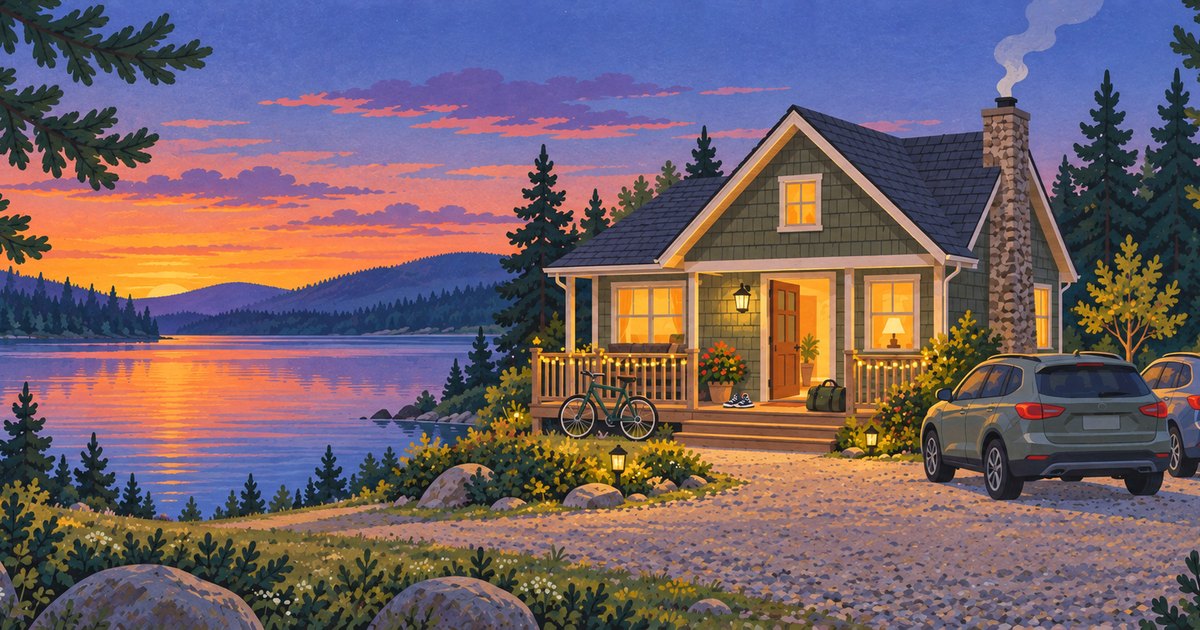
When you list your vacation home on Homier, you start with one address and a guest list made up entirely of people you trust. There's a second, quieter benefit built into the design. Over a year or two, sharing your place this way tends to create a community of its own: the guests you invite today are how new places to stay arrive later.
Here's how that works, and why it compounds.
One invite, two directions
Some of the people you'd invite to your place own vacation homes too. On public platforms, those homes are invisible to you; the best you can do is book a stranger's place through a stranger's feed. On Homier, the same act of inviting someone into your home gives them a natural path to do the same thing. Someone enjoys your place over a long weekend, sees how simple hosting is on their own terms, and adds their own home to the network.
The same list that fills your calendar can fill your getaways. Every invitation is a door that opens in both directions, and you don't have to do anything special to make that happen. You already did the hard part when you shared your place.
Your circles overlap. That's the point.
You invite your sister, your college roommate, and the neighbors who watch your dog. Your co-owner invites his people, one of whom has a mountain place. Your neighbor's book club includes someone with a beach cottage. Pretty soon your dashboard isn't one home anymore; it's four, each one connected to you through a chain of real relationships, and each owner who decided individually who gets in.
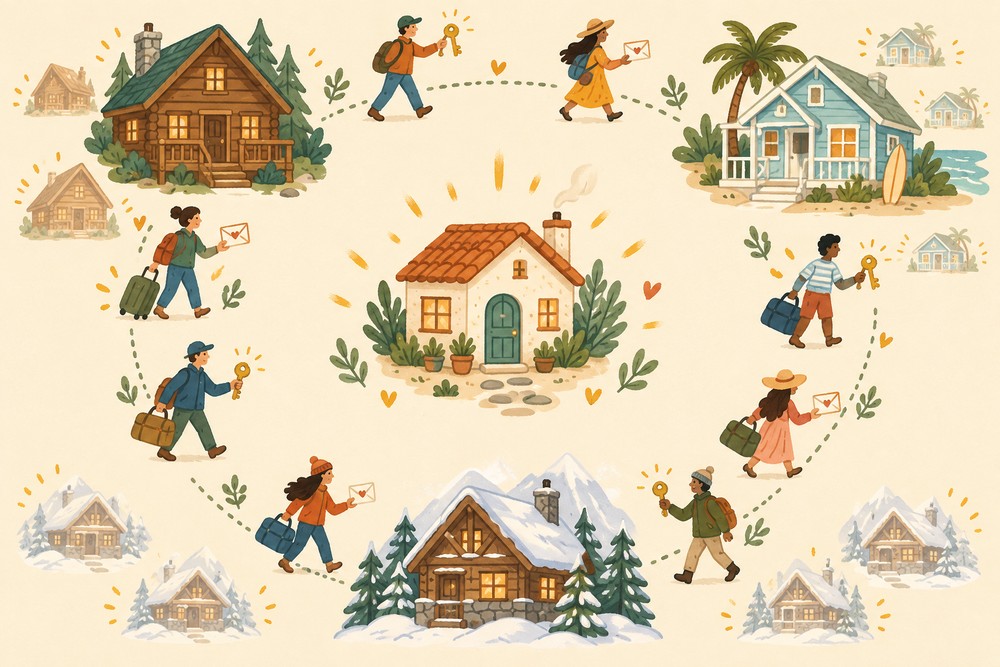
None of that happens through a public marketplace. There's no feed to be discovered on and no stranger requests to manage, so every home stays visible only to the people invited into it. When your circle connects with other circles, your list of places grows all by itself, and it stays made up of people vouched for by your people.
What that compounds into
- More places to stay, almost no extra work. Inviting someone is a single email. As the people in your circle start opening their own homes, weekends appear on your calendar that you never had to chase.
- Homes you actually want to stay in. Every listing belongs to someone connected to you, so you know something true about the owner and they know something true about you. A stay starts with trust instead of reviews.
- A circle that runs on goodwill. Nobody rates anybody on Homier. Trust lives where it always has, between people who know each other, and that's what keeps the same homes welcoming again and again.
- Privacy that doesn't erode as it grows. Growth on Homier means more friends of friends, not more exposure. Homes stay visible only to the people invited, always.
Homier gets better the more people you know on it. Every person you invite is someone who might invite you somewhere. When you open your door, you end up getting more than you give.
Curate your community
If you've already listed your place, the next step is simple: invite the people you'd trust with your house. Some of them may open their own homes in time, and some know the people who will. Host generously, stay with care, and the circle grows on its own. That's how a guest list becomes a community of places to stay.